Saturday, August 6, 2016

HISTORICAL RELIABILITY OF THE OLD TESTAMENT: Resources for Study


Atheist historian Will Durant on the Old Tes:tament

"The discoveries here summarized have restored considerable credit to those chapters of Genesis that record the early traditions of the Jews. In its outlines, and barring supernatural incidents, the story of the Jews as unfolded in the Old Testament has stood the test of criticism and archaeology; every year adds corroboration from documents, monuments, or excavations.... We must accept the Biblical account provisionally until it is disproved."

Durant, Will. Our Oriental Heritage, 1963, MJF Books; p. 300

~~~~~~~~~~~~*~~~~~~~~~~~~


Below are resources on the historical reliability of the Old Testament. I have tried to divide them into the various historical periods covered by the Old Testament:

GENERAL (Resources Covering the Whole Old Testament)

*Audio: "Reliability of the Old Testament Documents" (61 minutes) by Peter Gentry
*Essay/Book Chapter: "Reversals of Old Testament Criticism" by N.H. Ridderbos. FREE!
*Article: "Modern Old Testament Study" by Peter J. Williams
*Article: "Is the History of the Old Testament Accurate?" by Meredith G. Kline
*Article: "Bibliographic Test for the Old Testament" by James M. Rochford
*Book: On the Reliability of the Old Testament by K.A. Kitchen
*Book: Evidence That Demands A Verdict (2017 edition), Part III: "Evidence for the Old Testament" by Josh McDowell and Sean McDowell.
*Book: In Defense of the Bible by Terry L. Wilder and Steven B. Cowan, editors. I highly recommend this book. Top experts cover the spectrum of issues for both the Old and the New Testaments.
*Book: The Old Testament Documents: Are They Reliable and Relevant? by Walter C. Kaiser, Jr.
*Book: A Survey of Old Testament Introduction by Gleason Archer
*Book: Old Testament Introduction: General and Special, by John Howard Raven (New York: Revell, 1906). "Consists mostly of conservative response to liberal criticism of the Old Testament books." FREE!
*Book: Historical Evidences of the Truth of the Scripture Records (1860?) by George Rawlinson. Download it for FREE! here.
*Books: Biblical Commentary on the Old Testament by Keil and Delitszch (KD). Available for FREE many places but this link will take you to the STEP Bible (which is FREE online and also to be downloaded). This is an old work but still one of the best. And they soundly answered many of the questions skeptics continue to ask today.
*Study Bible: Apologetics Study Bible published by Holman
*Book: A Scientific Investigation Of The Old Testament (1926) by Robert Dick WilsonFREE! From a review of the book: "First, some words about the author. Robert Dick Wilson (February 4, 1856 – October 11, 1930) was an American linguist and Presbyterian scholar who made major contributions in verifying the reliability of the Hebrew Bible. In his quest to determine the accuracy of the original manuscripts, Wilson eventually learned 45 languages, including Hebrew, Aramaic, and Greek, as well as all the languages into which the Scriptures had been translated up to 600 AD. About the book: Whoever wants to know what a true scientific approach to the Old Testament study reveals, should read this book. It examines the arguments of the "Higher Criticism" about the authorship and the dating of these documents (especially the Pentateuch) in the light of the text itself, the Hebrew grammar, the vocabulary, the analogy in the documents of the nations that surrounded the Hebrews and other factors. The book contains some irrefutable arguments,which establish the trustworthiness and the historicity of the Old Testament documents,beyond any doubt.I believe it is a must read for everybody who is looking to find the truth about the book that describes itself as "The Word of God". (Bear in mind that it is a difficult book to read, since it is not a popularized scientific work)"

*Web Page: "Historicity of the Old Testament" at Theopedia

*Archaeological Confirmation of the Old Testament: Resources for StudyMuch more here! :)

GENESIS (Creation to the Patriarchs)
*Essays: "Who Wrote the First Five Books of the Bible?": "A collection of extracts from writings of Edward Young, Merrill Unger, William Green, Gleason Archer, and Oswald Allis. FREE!
*Blunt's Undesigned Coincidences and Paley's Horae Paulinae (1874)FREE!. The two most important books on undesigned coincidences currently available. See "Part I: The Veracity of the Books of Moses" (pages 1-109).
*Book: Essays on the Patriarchal Narratives. Alan R. Millard and Donald J. Wiseman, editors. 223 pages available to read for FREE online.
*Article: "The Tablet Theory of Genesis Authorship" by Curt Sewell
*Article: "Getting Over a Hump: Does the Lack of Camel Bones Disprove the Historicity of the Biblical Patriarchs?" by Ted Wright
*Article: "Is the Story of Joseph in the Bible a True Story?" by  Charles F. Aling
*Articles: "Joseph in Egypt" (a 6-part series at Associates for Biblical Research). Part II. Part III. Part IV. Part V. Part VI.
*Books: Biblical Commentary on the Old Testament by Keil and Delitszch (KD). Available for FREE many places but this link will take you to the STEP Bible (which is FREE online and also to be downloaded). This is an old work but still one of the best. And they soundly answered many of the questions skeptics continue to ask today. If you are looking for answers related to a specific passage of Scripture, you are likely to find a solid answer here.
*Articles: Dozens of articles on the period of the Genesis Flood available at Associates for Biblical Research
*Archaeological Confirmation of the Old Testament: Resources for StudyMuch more here! :)

EXODUS TO DEUTERONOMY (The Exodus & Wilderness Wandering)
*Video: "Patterns of Evidence: Exodus." (119 minutes) An excellent documentary on the evidence for the book of Exodus. Also available on Netflix streaming video.
*Blunt's Undesigned Coincidences and Paley's Horae Paulinae (1874)FREE!. The two most important books on undesigned coincidences currently available. See "Part I: The Veracity of the Books of Moses" (pages 1-109).
*Book: Israel in Egypt: The Evidence for the Authenticity of the Exodus Tradition by James K. Hoffmeier
*Book: Ancient Israel in Sinai: The Evidence for the Authenticity of the Wilderness Tradition by James K. Hoffmeier
*Essays: "Who Wrote the First Five Books of the Bible?": "A collection of extracts from writings of Edward Young, Merrill Unger, William Green, Gleason Archer, and Oswald Allis. FREE!
*Articles: Dozens of articles on the Patriarchal Period available at Associates for Biblical Research
*Books: Biblical Commentary on the Old Testament by Keil and Delitszch (KD). Available for FREE many places but this link will take you to the STEP Bible (which is FREE online and also to be downloaded). This is an old work but still one of the best. And they soundly answered many of the questions skeptics continue to ask today. If you are looking for answers related to a specific passage of Scripture, you are likely to find a solid answer here.
*Articles: Dozens of articles on the Exodus from Egypt available at Associates for Biblical Research
*Archaeological Confirmation of the Old Testament: Resources for StudyMuch more here! :)

JOSHUA (The Conquest of Canaan)
*Blunt's Undesigned Coincidences and Paley's Horae Paulinae (1874)FREE!. The two most important books on undesigned coincidences currently available. See "Part II: The Veracity of the Historical Scriptures": Sections I-IV (pages 110-123).
*Books: Biblical Commentary on the Old Testament by Keil and Delitszch (KD). Available for FREE many places but this link will take you to the STEP Bible (which is FREE online and also to be downloaded). This is an old work but still one of the best. And they soundly answered many of the questions skeptics continue to ask today. If you are looking for answers related to a specific passage of Scripture, you are likely to find a solid answer here.
*Articles: Dozens of articles on the Conquest of Canaan available at Associates for Biblical Research
*Archaeological Confirmation of the Old Testament: Resources for StudyMuch more here! :)

JUDGES & RUTH (The Period of the Judges)
*Videos: "Judges: Forgotten History" (7-part video series) by Bryant Wood of Associates for Biblical Research (6 to 11 minutes each)
*Blunt's Undesigned Coincidences and Paley's Horae Paulinae (1874)FREE!. The two most important books on undesigned coincidences currently available. See "Part II: The Veracity of the Historical Scriptures": Sections I-IV (pages 109-123).
*Books: Biblical Commentary on the Old Testament by Keil and Delitszch (KD). Available for FREE many places but this link will take you to the STEP Bible (which is FREE online and also to be downloaded). This is an old work but still one of the best. And they soundly answered many of the questions skeptics continue to ask today. If you are looking for answers related to a specific passage of Scripture, you are likely to find a solid answer here.
*Articles: Dozens of articles on the period of Israel's judges available at Associates for Biblical Research
*Archaeological Confirmation of the Old Testament: Resources for StudyMuch more here! :)

1 SAMUEL TO 2 CHRONICLES, THE PROPHETS & PSALMS (The Period of the Kings)
*Article: "Evidence for Inerrancy from an Unexpected Source: OT Chronology" by Rodger C. Young
*Books: The Mysterious Numbers of the Hebrew Kings by Edwin R. Thiele. A summarized version of this book: A Chronology of the Hebrew Kings.
*Blunt's Undesigned Coincidences and Paley's Horae Paulinae (1874)FREE!. The two most important books on undesigned coincidences currently available. See "Part II: The Veracity of the Historical Scriptures": Sections V-XXVIII (pages 123-219) and "Part III: The Veracity of the Prophetical Scriptures" (pages 220-253).
*Books: Biblical Commentary on the Old Testament by Keil and Delitszch (KD). Available for FREE many places but this link will take you to the STEP Bible (which is FREE online and also to be downloaded). This is an old work but still one of the best. And they soundly answered many of the questions skeptics continue to ask today. If you are looking for answers related to a specific passage of Scripture, you are likely to find a solid answer here.
*Article: "Does Archaeology Prove Chronicles Sources?" by Robert North
*Articles: Dozens of articles on the United Monarchy available at Associates for Biblical Research
*Archaeological Confirmation of the Old Testament: Resources for StudyMuch more here! :)

NEHEMIAH, ESTHER & THE PROPHETS (The Period of Exile)
*Article: "2,500 Year Old Evidence of Jewish Life in Babylonian Exile Found" at Rose Publishing blog
*Article: "Judah in Exile"
*Books: Biblical Commentary on the Old Testament by Keil and Delitszch (KD). Available for FREE many places but this link will take you to the STEP Bible (which is FREE online and also to be downloaded). This is an old work but still one of the best. And they soundly answered many of the questions skeptics continue to ask today. If you are looking for answers related to a specific passage of Scripture, you are likely to find a solid answer here.
*Archaeological Confirmation of the Old Testament: Resources for StudyMuch more here! :)


STILL LOOKING?....
*Much more at Archaeological Confirmation of the Old Testament: Resources for Study....
OR Archaeological Confirmation of the New Testament: Resources for Study....
OR New Testament Reliability: Resources for Study
OR Contradictions in the Bible?....Interpreting Scripture: Resources for Study


"Moses Smashing the Tablets of the Law" (1659) by Rembrandt

Friday, August 5, 2016

THE UNIVERSAL INNATE KNOWLEDGE OF GOD: Resources for Study

"In every language, every tribe, and every culture, we find a word for God. He has not left Himself without a witness, nor is there anywhere on earth where His fingerprints are absent."

~ D. James Kennedy and Jerry Newcombe, The Presence of a Hidden God


People from every culture testify to God's existence, going back to ancient times. If God did not exist, shouldn't there be cultures that do not know anything of God? This universal testimony to God's existence is strong evidence that God exists and that he has revealed himself to all people as Romans 1:18-20 says.

Below are resources that present this evidence:


"Is Belief in God Hardwired?" (2-minute video). 
The One-Minute Apologist interviews Larry Taunton


CULTURAL & HISTORICAL STUDIES
*Audio: "podcast 96 – Dr. Winfried Corduan on the case for original monotheism" (a 54-minute interview with Dr. Corduan)
*Audio: Win Corduan is interviewed by Nick Peters of Deeper Waters Ministries and presents the evidence for original monotheism (that originally people worshiped one personal God and that polytheism/the worship of gods came later).
*Articles: David Marshall argues for TACT (and also here): 

Excerpt: "Beginning in 2000, in Jesus and the Religions of Man, I have offered an argument for God that we might call the Theistic Argument from Cultural Transcendence (TACT). The gist of the argument is that (a) if an understanding of God transcends a particular culture, it is much more likely to be true than if it does not. (b) The idea of God does, in fact, transcend the Abrahamic tradition from which monotheism is often said to have arisen. It can, in fact, be found in many highly scattered and diverse cultures, where it must have arisen independently. (c) Therefore God is much more likely to be real than religious ideas that are limitted to one particular culture, or flow out from one localized source."

*Book: Jesus and the Religions of Man by David Marshall


SOCIOLOGICAL STUDIES CORROBORATE
*Video: "Is Belief in God Hardwired?" by Larry Taunton (2 minutes)
*Video: "Why children are born believers in God" by Justin Barrett (3 1/2 minutes)
*Video: "Do our Mental Tools Cause Belief in God? Justin Barrett at The Veritas Forum" by Justin Barrett (8 1/2 minutes)
*Article: "The God issue: We are all born believers" by Justin Barrett (in New Scientist)
*Article: "Children Are Born Believers in God, Academic Claims"

Tuesday, July 26, 2016

SCHOLARS DISMISS THE NONSENSE THAT JESUS WAS JUST A MYTH

There are people who say that Jesus never existed.  A couple of them even have Ph.D.'s (though they do not hold any kind of scholarly position). If that were true, then he certainly never died for our sins and he certainly never rose from the dead. If that were the case, Christianity would be meaningless. 

As Paul says in 1 Corinthians 15:14-20: "And if Christ has not been raised, our preaching is useless and so is your faith. More than that, we are then found to be false witnesses about God, for we have testified about God that he raised Christ from the dead. But he did not raise him if in fact the dead are not raised. For if the dead are not raised, then Christ has not been raised either. And if Christ has not been raised, your faith is futile; you are still in your sins. Then those also who have fallen asleep in Christ are lost. If only for this life we have hope in Christ, we are of all people most to be pitied. But Christ has indeed been raised from the dead...."

But the reality is that Jesus most certainly did exist. More than that, he most certainly taught truths that have transformed the world, lived as an unsurpassed example of love and compassion, healed large numbers of people and performed all kinds of extraordinary miracles, cast out demons, lived a sinless life, fulfilled dozens of ancient prophecies, was crucified and rose from the dead three days later. And he chose apostles to speak for him and to be bear witness to all of this.

Since the beginning of the year, I have been working on an extensive blog page to present this evidence, which is currently a 34-point outline--a small book. I hope to be able to post an initial publication of it it in the next few weeks. The amount of evidence is staggering. Nothing could be more certain than the Jesus who is revealed in the New Testament.

And that is the reason that scholars who know and understand the evidence of history readily dismiss the wild notion that Jesus never existed. Thanks to Nick Peters of Deeper Waters Ministries for this list of quotes from scholars from 1922 to 2015 (plus a couple from my friend Jacob Franklin):

"There is, lastly, a group of writers who endeavour to prove that Jesus never lived—that the story of his life is made up by mingling myths of heathen gods, Babylonian, Egyptian, Persian, Greek, etc. No real scholar regards the work of these men seriously. They lack the most elementary knowledge of historical research. Some of them are eminent scholars in other subjects, such as Assyriology and mathematics, but their writings about the life of Jesus have no more claim to be regarded as historical than Alice in Wonderland or the Adventures of Baron Munchausen." - George Aaron Barton, Jesus of Nazareth: A Biography, Macmillan, (1922)

"An extreme view along these lines is one which denies even the historical existence of Jesus Christ—a view which, one must admit, has not managed to establish itself among the educated, outside a little circle of amateurs and cranks, or to rise above the dignity of the Baconian theory of Shakespeare." - Edwyn Robert Bevan, Hellenism And Christianity, 2nd ed., G. Allen and Unwin, (1930), p. 256

"Of course the doubt as to whether Jesus really existed is unfounded and not worth refutation. No sane person can doubt that Jesus stands as founder behind the historical movement whose first distinct stage is represented by the oldest Palestinian community." - Rudolf Bultmann, Jesus and the Word, Collins, (1958), p. 13

"A hundred and fifty years ago a fairly well respected scholar named Bruno Bauer maintained that the historical person Jesus never existed. Anyone who says that today—in the academic world at least—gets grouped with the skinheads who say there was no Holocaust and the scientific holdouts who want to believe the world is flat." - Mark Allan Powell, Jesus as a Figure in History: How Modern Historians View the Man from Galilee, Westminster John Knox, (1998), p. 168

"The data we have are certainly adequate to confute the view that Jesus never lived, a view that no one holds in any case." - Charles E. Charleston, Prologue from Bruce Chilton & Craig A. Evans, eds., Studying the Historical Jesus: Evaluations of the State of Current Research, Brill, (1998), p. 3

"Most scholars regard the arguments for Jesus' non-existence as unworthy of any response—on a par with claims that the Jewish Holocaust never occurred or that the Apollo moon landing took place in a Hollywood studio." - Michael James McClymond, Familiar Stranger: An Introduction to Jesus of Nazareth, Eerdmans, (2004), p. 8, 23–24

"A phone call from the BBC’s flagship Today programme: would I go on air on Good Friday morning to debate with the authors of a new book, The Jesus Mysteries? The book claims (or so they told me) that everything in the Gospels reflects, because it was in fact borrowed from, much older pagan myths; that Jesus never existed; that the early church knew it was propagating a new version of an old myth, and that the developed church covered this up in the interests of its own power and control. The producer was friendly, and took my point when I said that this was like asking a professional astronomer to debate with the authors of a book claiming the moon was made of green cheese." - N. T. Wright, Jesus' Self Understanding, from Stephen T. Davis, Daniel Kendall, Gerald O’Collins, eds., The Incarnation, Oxford University Press, (2004), p. 48


"...only the shallowest of intellects would dare to deny Jesus' existence. And yet this pathetic denial is still parroted by 'the village atheist,' bloggers on the Internet, or such organisations as the Freedom from Religion Foundation." 
- Paul L. Maier (distinguished professor of ancient history), Did Jesus Really Exist?, 4truth.net, 2007,
http://www.4truth.net/fourtruthpbjesus.aspx... (Accessed February 4th 2016)

"In the academic mind, there can be no more doubt whatsoever that Jesus existed than did Augustus and Tiberius, the emperors of his lifetime." - Carsten Peter Thiede, Jesus, Man or Myth?, Lion, (2005), p. 23

"I think the evidence is just so overwhelming that Jesus existed, that it's silly to talk about him not existing. I don't know anyone who is a responsible historian, who is actually trained in the historical method, or anybody who is a biblical scholar who does this for a living, who gives any credence at all to any of this." - Bart Ehrman, interview with David V. Barrett, The Gospel According to Bart, Fortean Times, (2007)

"The very logic that tells us there was no Jesus is the same logic that pleads that there was no Holocaust. On such logic, history is no longer possible. It is no surprise then that there is no New Testament scholar drawing pay from a post who doubts the existence of Jesus. I know not one. His birth, life, and death in first-century Palestine have never been subject to serious question and, in all likelihood, never will be among those who are experts in the field. The existence of Jesus is a given." - Nicholas Perrin, Lost in Transmission?: What We Can Know About the Words of Jesus, Thomas Nelson, (2007), p. 32

"Frankly, I know of no ancient historian or biblical historian who would have a twinge of doubt about the existence of a Jesus Christ - the documentary evidence is simply overwhelming." - Graeme Clarke, quoted by John Dickson in Facts and friction of Easter, The Sydney Morning Herald, (2008)

"To describe Jesus' non-existence as 'not widely supported' is an understatement. It would be akin to me saying, "It is possible to mount a serious, though not widely supported, scientific case that the 1969 lunar landing never happened." There are fringe conspiracy theorists who believe such things - but no expert does. Likewise with the Jesus question: his non-existence is not regarded even as a possibility in historical scholarship. Dismissing him from the ancient record would amount to a wholesale abandonment of the historical method." - John Dickson, Jesus: A Short Life, Lion, (2008), p. 22-23


“I should say at the outset that none of this [mythicist] literature is written by scholars trained in New Testament or early Christian studies teaching at the major, or even the minor, accredited theological seminaries, divinity schools, universities, or colleges of North America or Europe (or anywhere else in the world). Of the thousands of scholars of early Christianity who teach at such schools, none of them, to my knowledge, has any doubt that Jesus existed.” - Bart D. Ehrman, Did Jesus Exist?: The Historical Argument For Jesus of Nazareth, Harper Collins, (2012), p. 2

“…the whole idea that Jesus of Nazareth did not exist as a historical figure is verifiably false. Moreover, it has not been produced by anyone or anything with any reasonable relationship to critical scholarship. It belongs in the fantasy lives of people who used to be fundamentalist Christians. They did not believe in critical scholarship then, and they do not do so now. I cannot find any evidence that any of them have adequate professional qualifications.” - Maurice Casey (atheist), Jesus: Evidence and Argument or Mythicist Myths?, T&T Clark, (2014), p. 243

"No serious historian, of any religious or nonreligious stripe, doubts that Jesus of Nazareth really lived in the first century and was executed under the authority of Pontius Pilate, the governor of Judea and Samaria. -- Jesus and the Remains of His Day, Craig Evans (2015), p. 147


Recommended Reading
*Jesus Is No Myth by David Marshall
Still looking?....
*Check out my blog article: "Jesus' Historicity: Resources for Study."


Monday, July 25, 2016

THE APOLOGETICS TOOLBOX: The Place to Find Almost Every Tool You Will Need


Pages at the core of my blog's mission:

*HOW JESUS IS UNIQUE FROM ALL OTHER RELIGIOUS LEADERS....And Why That Matters
*THE CUMULATIVE CASE FOR CHRISTIANITY: An outline argument with many resources
*A GUIDE TO YOUR FIRST APOLGETICS BOOK: Concise Reviews of the 17 Best Books
*MASTER LIST OF APOLOGETIC RESOURCES: Links to every imaginable resource (at least that is the goal)
*1000's of *FREE!* BOOKS, AUDIOBOOKS & JOURNALS for Apologetics & Bible Study
*TONS OF *FREE!* ONLINE CLASSES & LECTURES for studying Apologetics & the Bible
*READ & STUDY THE BIBLE: Tons of Resources for reading and studying the Bible
*DO WE NEED APOLOGETICS IN THE CHURCH?: A brief article with lots of resources
*WORKS OF DEAD APOLOGISTS: Resources for Historical Apologetics
*WHAT THIS BLOG IS ALL ABOUT


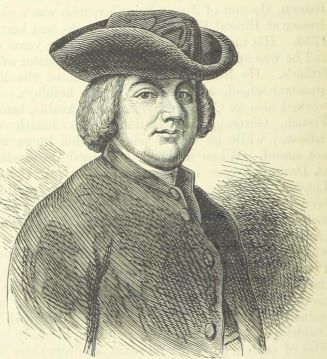
ON MIRACLES: WILLIAM PALEY'S RESPONSE TO DAVID HUME

In the opening section ("Preparatory Considerations") of A View to the Evidences of Christianity (1794), William Paley offers a masterful response to David Hume's argument against miracles. This section is presented in full below (and at the bottom of the page there are links to FREE! editions of the entire book, which is a classic cumulative argument for Christianity):

PREPARATORY CONSIDERATIONS. I deem it unnecessary to prove that mankind stood in need of a revelation because I have met with no serious person who thinks that, even under the Christian revelation, we have too much light, or any degree of assurance which is superfluous. I desire, moreover, that in judging of Christianity, it may be remembered that the question lies between this religion and none: for, if the Christian religion be not credible, no one, with whom we have to do, will support the pretensions of any other. 

Suppose, then, the world we live in to have had a Creator; suppose it to appear, from the predominant aim and tendency of the provisions and contrivances observable in the universe, that the Deity, when he formed it, consulted for the happiness of his sensitive creation; suppose the disposition which dictated this counsel to continue; suppose a part of the creation to have received faculties from their Maker, by which they are capable of rendering a moral obedience to his will, and of voluntarily pursuing any end for which he has designed them; suppose the Creator to intend for these, his rational and accountable agents, a second state of existence, in which their situation will be by their behaviour in the first state, by which suppose (and by no other) the objection to the divine government in not putting a difference between the good and the bad, and the inconsistency of this confusion with the care and benevolence discoverable in the works of the Deity is done away; suppose it to be of the utmost importance to the subjects of this dispensation to know what is intended for them, that is, suppose the knowledge of it to be highly conducive to the happiness of the species, a purpose which so many provisions of nature are calculated to promote: Suppose, nevertheless, almost the whole race, either by the imperfection of their faculties, the misfortune of their situation, or by the loss of some prior revelation, to want this knowledge, and not to be likely, without the aid of a new revelation, to attain it; under these circumstances, is it improbable that a revelation should be made? Is it incredible that God should interpose for such a purpose? Suppose him to design for mankind a future state; is it unlikely that he should acquaint him with it? 

Now in what way can a revelation be made, but by miracles? In none which we are able to conceive. Consequently, in whatever degree it is probable, or not very improbable, that a revelation should be communicated to mankind at all: in the same degree is it probable, or not very improbable, that miracles should be wrought. Therefore, when miracles are related to have been wrought in the promulgating of a revelation manifestly wanted, and, if true, of inestimable value, the improbability which arises from the miraculous nature of the things related is not greater than the original improbability that such a revelation should be imparted by God. 

I wish it, however, to be correctly understood, in what manner, and to what extent, this argument is alleged. We do not assume the attributes of the Deity, or the existence of a future state, in order to prove the reality of miracles. That reality always must be proved by evidence. We assert only, that in miracles adduced in support of revelation there is not any such antecedent improbability as no testimony can surmount. And for the purpose of maintaining this assertion, we contend, that the incredibility of miracles related to have been wrought in attestation of a message from God, conveying intelligence of a future state of rewards and punishments, and teaching mankind how to prepare themselves for that state, is not in itself greater than the event, call it either probable or improbable, of the two following propositions being true: namely, first, that a future state of existence should be destined by God for his human creation; and, secondly, that, being so destined, he should acquaint them with it. It is not necessary for our purpose, that these propositions be capable of proof, or even that, by arguments drawn from the light of nature, they can be made out to be probable; it is enough that we are able to say concerning them, that they are not so violently improbable, so contradictory to what we already believe of the divine power and character, that either the propositions themselves, or facts strictly connected with the propositions (and therefore no further improbable than they are improbable), ought to be rejected at first sight, and to be rejected by whatever strength or complication of evidence they be attested. 

This is the prejudication we would resist. For to this length does a modern objection to miracles go, viz., that no human testimony can in any case render them credible. I think the reflection above stated, that, if there be a revelation, there must be miracles, and that, under the circumstances in which the human species are placed, a revelation is not improbable, or not to any great degree, to be a fair answer to the whole objection. 

But since it is an objection which stands in the very threshold our argument, and, if admitted, is a bar to every proof, and to all future reasoning upon the subject, it may be necessary, before we proceed further, to examine the principle upon which it professes to be founded; which principle is concisely this, That it is contrary to experience that a miracle should be true, but not contrary to experience that testimony should be false. 

Now there appears a small ambiguity in the term "experience," and in the phrases, "contrary to experience," or "contradicting experience," which it may be necessary to remove in the first place. Strictly speaking, the narrative of a fact is then only contrary to experience, when the fact is related to have existed at a time and place, at which time and place we being present did not perceive it to exist; as if it should be asserted, that in a particular room, and at a particular hour of a certain day, a man was raised from the dead, in which room, and at the time specified, we, being present and looking on, perceived no such event to have taken place. Here the assertion is contrary to experience properly so called; and this is a contrariety which no evidence can surmount. It matters nothing, whether the fact be of a miraculous nature, or not. But although this be the experience, and the contrariety, which Archbishop Tillotson alleged in the quotation with which Mr. Hume opens his Essay, it is certainly not that experience, nor that contrariety, which Mr. Hume himself intended to object. And short of this I know no intelligible signification which can be affixed to the term "contrary to experience," but one, viz., that of not having ourselves experienced anything similar to the thing related, or such things not being generally experienced by others. I say "not generally" for to state concerning the fact in question, that no such thing was ever experienced, or that universal experience is against it, is to assume the subject of the controversy. 

Now the improbability which arises from the want (for this properly is a want, not a contradiction) of experience, is only equal to the probability there is, that, if the thing were true, we should experience things similar to it, or that such things would be generally experienced. Suppose it then to be true that miracles were wrought on the first promulgation of Christianity, when nothing but miracles could decide its authority, is it certain that such miracles would be repeated so often, and in so many places, as to become objects of general experience? Is it a probability approaching to certainty? Is it a probability of any great strength or force? Is it such as no evidence can encounter? And yet this probability is the exact converse, and therefore the exact measure, of the improbability which arises from the want of experience, and which Mr. Hume represents as invincible by human testimony. 

It is not like alleging a new law of nature, or a new experiment in natural philosophy; because, when these are related, it is expected that, under the same circumstances, the same effect will follow universally; and in proportion as this expectation is justly entertained, the want of a corresponding experience negatives the history. But to expect concerning a miracle, that it should succeed upon a repetition, is to expect that which would make it cease to be a miracle, which is contrary to its nature as such, and would totally destroy the use and purpose for which it was wrought. 

The force of experience as an objection to miracles is founded in the presumption, either that the course of nature is invariable, or that, if it be ever varied, variations will be frequent and general. Has the necessity of this alternative been demonstrated? Permit us to call the course of nature the agency of an intelligent Being, and is there any good reason for judging this state of the case to be probable? Ought we not rather to expect that such a Being, on occasions of peculiar importance, may interrupt the order which he had appointed, yet, that such occasions should return seldom; that these interruptions consequently should be confined to the experience of a few; that the want of it, therefore, in many, should be matter neither of surprise nor objection? 

But, as a continuation of the argument from experience, it is said that, when we advance accounts of miracles, we assign effects without causes, or we attribute effects to causes inadequate to the purpose, or to causes of the operation of which we have no experience of what causes, we may ask, and of what effects, does the objection speak? If it be answered that, when we ascribe the cure of the palsy to a touch, of blindness to the anointing of the eyes with clay, or the raising of the dead to a word, we lay ourselves open to this imputation; we reply that we ascribe no such effects to such causes. We perceive no virtue or energy in these things more than in other things of the same kind. They are merely signs to connect the miracle with its end. The effect we ascribe simply to the volition of Deity; of whose existence and power, not to say of whose Presence and agency, we have previous and independent proof. We have, therefore, all we seek for in the works of rational agents—a sufficient power and an adequate motive. In a word, once believe that there is a God, and miracles are not incredible. 

Mr. Hume states the ease of miracles to be a contest of opposite improbabilities, that is to say, a question whether it be more improbable that the miracle should be true, or the testimony false: and this I think a fair account of the controversy. But herein I remark a want of argumentative justice, that, in describing the improbability of miracles, he suppresses all those circumstances of extenuation, which result from our knowledge of the existence, power, and disposition of the Deity; his concern in the creation, the end answered by the miracle, the importance of that end, and its subserviency to the plan pursued in the work of nature. As Mr. Hume has represented the question, miracles are alike incredible to him who is previously assured of the constant agency of a Divine Being, and to him who believes that no such Being exists in the universe. They are equally incredible, whether related to have been wrought upon occasion the most deserving, and for purposes the most beneficial, or for no assignable end whatever, or for an end confessedly trifling or pernicious. This surely cannot be a correct statement. In adjusting also the other side of the balance, the strength and weight of testimony, this author has provided an answer to every possible accumulation of historical proof by telling us that we are not obliged to explain how the story of the evidence arose. Now I think that we are obliged; not, perhaps, to show by positive accounts how it did, but by a probable hypothesis how it might so happen. The existence of the testimony is a phenomenon; the truth of the fact solves the phenomenon. If we reject this solution, we ought to have some other to rest in; and none, even by our adversaries, can be admired, which is not inconsistent with the principles that regulate human affairs and human conduct at present, or which makes men then to have been a different kind of beings from what they are now. 

But the short consideration which, independently of every other, convinces me that there is no solid foundation in Mr. Hume's conclusion, is the following. When a theorem is proposed to a mathematician, the first thing he does with it is to try it upon a simple case, and if it produce a false result, he is sure that there must be some mistake in the demonstration. Now to proceed in this way with what may be called Mr. Hume's theorem. If twelve men, whose probity and good sense I had long known, should seriously and circumstantially relate to me an account of a miracle wrought before their eyes, and in which it was impossible that they should be deceived: if the governor of the country, hearing a rumour of this account, should call these men into his presence, and offer them a short proposal, either to confess the imposture, or submit to be tied up to a gibbet; if they should refuse with one voice to acknowledge that there existed any falsehood or imposture in the case: if this threat were communicated to them separately, yet with no different effect; if it was at last executed; if I myself saw them, one after another, consenting to be racked, burnt, or strangled, rather than live up the truth of their account;—still if Mr. Hume's rule be my guide, I am not to believe them. Now I undertake to say that there exists not a sceptic in the world who would not believe them, or who would defend such incredulity. 

Instances of spurious miracles supported by strong apparent testimony undoubtedly demand examination; Mr. Hume has endeavoured to fortify his argument by some examples of this kind. I hope in a proper place to show that none of them reach the strength or circumstances of the Christian evidence. In these, however, consists the weight of his objection; in the principle itself, I am persuaded, there is none.

*************
*A View of the Evidences of Christianity by William Paley (1743–1805). . Kindle Edition. Location 53-156 (The entire book is FREE! on Kindle, which can be read on any electronic device using the Kindle app available at Amazon). It is also FREE! in PDF files or read online. You will also find a brief introduction to the book. You can also find another brief introduction at The Library of Historical Apologetics (which includes a link to yet another FREE! edition of this work with notes by Richard Whately). You can also find that edition at Google Books.

*For much, much more on miracles, see my blog article article: "Miracles: Resources for Study."


Saturday, May 14, 2016

THE IMPORTANCE OF PAPIAS, DISCIPLE OF THE APOSTLE JOHN

Papias (who wrote c.110-125 AD and lived c.65-130 AD) is important for several reasons. Let me highlight seven:

(1) He is one of dozens of early writers to testify to Jesus' historicity. He not only knew at least two firsthand eyewitnesses to Jesus, the apostle John and another disciple named Aristion; he also interviewed many others who knew other apostles and disciples of Jesus. From these, he gathered enough eyewitness testimony to fill five volumes! This 5-volume work was entitled The Exposition of the Sayings of the Lord (Fragment 3, Eusebius' Church History 3.39.1). Furthermore, he provided historical confirmation of Jesus' miracles in this work as is testified to by Philip of Side: "As for those who were raised from the dead by Christ, he states that they survived until the time of Hadrian" (Fragment 5, Philip of Side's 5th Century Church History).

(2 & 3) In "Fragment 6" (excerpted from Eusebius' Church History, 3.39.15-16) he establishes the New Testament Gospels of Mark and Matthew as eyewitness accounts and confirms their authorship:

....but now, to the extracts already made, we shall add, as being a matter of primary importance, a tradition regarding Mark who wrote the Gospel, which he [Papias] has given in the following words]: And the presbyter said this. Mark having become the interpreter of Peter, wrote down accurately whatsoever he remembered. It was not, however, in exact order that he related the sayings or deeds of Christ. For he neither heard the Lord nor accompanied Him. But afterwards, as I said, he accompanied Peter, who accommodated his instructions to the necessities [of his hearers], but with no intention of giving a regular narrative of the Lord's sayings. Wherefore Mark made no mistake in thus writing some things as he remembered them. For of one thing he took especial care, not to omit anything he had heard, and not to put anything fictitious into the statements. [This is what is related by Papias regarding Mark; but with regard to Matthew he has made the following statements]: Matthew put together the oracles [of the Lord] in the Hebrew language, and each one interpreted them as best he could.

*For Mark also see Fragment 21.

(4) And in fragments 19 and 20, Papias confirms the authorship of the Gospel of John:

FRAGMENT 19: "Here begins the summary of the Gospel According to John: The Gospel of John was made known and given to the churches by John while he was still in the flesh, as a man of Hierapolis by the name of Papias, a beloved disciple of John, has related in the exoteric--that is, the last--part of his five books. Indeed, he wrote down the Gospel correctly as John dictated." (As preserved in the 9th Century Codex Vaticanus Alexandrinus 14, p.585 of Holmes' The Apostolic Fathers: Greek Texts and English Translations)

(5) The apostle John is the author of Revelation (Fragment 3, Eusebius' Church History 3.39.6).

(6) He thereby, also provides valuable early testimony to their canonicity, serving as an important link in the "chain of custody" establishing their apostolic provenance (as being the work of an apostle or their associates is of primary importance in including any book in the canon of the New Testament).

(7) Finally, Papias was a disciple of John's and provides details about John's life that are not found in the New Testament, most importantly, his martyrdom:

a. The apostle John lived until the time of the Emperor Trajan, who ruled from 98-117 AD (Fragment 1).

b. In Fragment 5, Philip of Side's Church History (5th Century) tells us that the account of John's martyrdom was recorded in the second volume of Papias' Exposition of the Sayings of the Lord.

And from Fragment 6, which is preserved in The Chronicle of George the Sinner (9th Century):

After Domitian [fl. 81-96], Nerva ruled for a year, who, having recalled John from the island, released him to dwell in Ephesus. At the time he was the sole survivor of the twelve apostles and composed the gospel according to himself: he was held worthy of martyrdom.
For Papias, bishop of Hierapolis, who was his eyewitness, in the second volume of the Lord's Reports alleged that he was killed by Jews. Having clearly fulfilled, with his brother, the prediction of Christ about them and their own agreement about this and submission: for the Lord said to them, "Can you drink the cup I will drink?" [Mark 10:38f.] and they gave their assent willingly and agreed: You shall drink, I say, my cup and you shall be baptized with the baptism I am baptized. And reasonably: for God cannot lie. Thus, the erudite Origen also affirmed in his commentary of Matthew, that John was martyred, having intimated that he learned this from the sucessors of the apostles. And indeed the well-read Eusebius in the Hist. Eccl. [3.1] says: "Thomas was allotted Parthia; but John Asia, where he resided and died in Ephesus."


PAPIAS' UNIQUE POSITION
A little biographical information further demonstrates Papias' unique position to provide this testimony. Papias was one of the "apostolic fathers" (see my blog article on the apostolic fathers), that is he was a disciple of one of the apostles. He was bishop (lead pastor) of the church at Hierapolis and a disciple of the apostle John, who lived at the end of the first century and beginning of the second century. The city of Hierapolis (where Papias was bishop) was at the intersection of two roads that connected four major cities that were important centers of the early church: Syrian Antioch, Ephesus, Attalia and Smyrna. He, therefore, would have had unique access to travelers who knew Jesus or Jesus' disciples.

Over the years, he interviewed many who had known Jesus' apostles and disciples, and (as noted previously) he himself knew the apostle John and a disciple named Aristion. He collected the notes from these interviews and composed a five volume work on them, commonly known as the Exposition of the Sayings of the Lord. As Bauckham has noted, however, the Greek word logia that is translated "Sayings" almost certainly refers both to the things Jesus said and to the things he did (p. 214 of Jesus and the Eyewitnesses). The most likely scenario is that he collected these interview notes over a period of two or three decades (perhaps 85-110 AD) and finished composing this five volume work at the beginning of the second century (circa 110 AD or shortly thereafter, though some would place his work as late as 140 AD).

As Bauckham shows, Papias was heavily influenced by the tradition of ancient Greek historiography and its concern for eyewitness testimony. (Read the chapters from Bauckham's book referenced below for more details on this.)

Unfortunately, we only have a couple dozen fragments left from that work, which was known and used for several centuries but has since disappeared into history. A collection of 26 of these fragments can be found in Michael W. Holmes' edition of the The Apostolic Fathers: Greek Texts and English Translations.

It would be amazing if this text would suddenly re-emerge from the sands of Egypt or ancient jars in a desert cave; but barring that, the fragments of Papias that we do have provide valuable early testimony linking the New Testament Gospels back to the apostles, those who were eyewitnesses to Jesus' ministry, death and resurrection (Acts 1:21-22).


RESOURCES FOR FURTHER STUDY
Online texts
*Early Christian Writings hosts the text of the "Fragments of Papias" and a nice selection of resources.

Articles
*A comprehensive and nicely organized collection of the fragments of Papias compiled and organized by Peter Kirby
*"Did Papias Know the Apostle John?" by Michael Kruger
*An article on Papias followed by a significant bibliography at EarlyChurch.org.uk

Book Chapters
*The Apostolic Fathers: Greek Texts and English Translations by Michael W. Holmes (an updated and revised version of the classic work by Lightfoot and Harmer) contains 26 "fragments of Papias" gleaned from various ancient texts. (Also available in an edition without the Greek texts, both of which can be found at the link given in the title above.)
*Eusebius' Church History has a section on Papias (Book 3, Chapter 39). Eusebius completed his history about 325 AD.
*Jesus and the Eyewitnesses by Richard Bauckham has three excellent chapters on Papias (chapters 2, 9 and 16) and you can read the first chapter (his overview of Papias) for FREE on Kindle (using the "sample": see button under the "Buy" button....OR using the "Look Inside" preview by clicking on the link above the thumbnail of the book's cover). These three chapters by themselves are worth the price of the book, as Baukham's careful study dispenses with a lot of misinformation and uncovers important details about Papias' important contribution. Chapter 2 is a general article on Papias. Chapter 9 explores what Papias tells us about the Gospels of Mark and Matthew. And Chapter 16 deals with what Papias tells us about the Gospel of John.

Books
*Papias and The New Testament by Monte Shanks. Excellent argument for the importance of Papias and skillfully clears up some significant issues and misinformation. For an overview of his argumentation see: "Did Papias Know the Apostle John?" by Michael Kruger. You can also review a significant portion by downloading a sample of the Kindle version.